Book review: A glorious nostalgia trip for anyone who cut their teeth on pioneering microcomputers of the late 1970s and 1980s
 Author:
 Gordon Laing
Publisher: Ilex
190 pages, 23.5cm x 25.5cm
ISBN: 1904705391
Jacket price: UK£19.95, US$29.99, EU€32.50
We have
Amazon discounts available at the end of this page.
Hang on just a minute! This is a digital photography site, so what's this all about? A review of a book for ageing computer nerds? Absolutely! I'd bet a fair bit that there are quite a few dpnow readers who fit that description to varying degrees, including yours truly. If you do, then you will love Digital Retro. If you don't, you might know someone who does – hint: this book would make a great gift.
To further strengthen my case, the author of Digital Retro is Gordon Laing, a fellow-journalist I have known for good length of time and who, like myself, has found himself writing a lot of articles about digital photography in recent years. He's also a very keen photographer in his own right. Laing's main claim to fame is a spell as editor of top UK computer magazine, Personal Computer World and, more recently, as radio presenter of an IT discussion magazine on a London talk-radio station.
And before I rest my case, let's face it – without PET 2001s, Apple IIs, Sinclair ZXs and all the rest of them, we wouldn't have the glorious medium that is digital photography now (sounds like a catchy slogan, that!).
Starting with a bit of history
Digital Retro is a look back at the emergence of the microcomputer-powered personal computer phenomenon and the subsequent evolutionary roller coaster that has since culminated in the modern IT industry (and digital cameras!). Laing starts with the 1975 MITS Altair 8800, though there is a preface titled: 'A Brief History of Computers'. These four pages alone are packed with interesting facts and anecdotes that Laing has researched meticulously. For example, did you know that when the founders of Intel, Gordon Moore, of Moore's Law fame and Robert Noyce, first set up shop, their company was called NM Electronics, only later becoming 'Intel' after buying the name off a local hotel chain?
The 15 year struggle for world domination
1976 and the arrival of the Apple I kit computer is identified as the real starting block for the personal computer marathon. Laing eloquently sets the reader up for the rest of the book: "Over the next fifteen years, an enormous variety of machines was launched, each hoping for fame and fortune – until one standard eventually gained sufficient momentum to utterly dominate the planet. What follows are their stories."
Those stories cover 44 different personal computers and computer games consoles up to the NeXT Cube of 1988. The computers covered constitute a well-balanced mix of sensible and far-out offerings from the US, UK and Japan. Laing knows that a few obvious candidates for inclusion have been missed off and I regard it as a personal triumph to have reminded him, over a beer recently, of at least a couple of models that he hadn't thought of – the Memotech and the UK101 kit computer, which was a development of the Ohio SuperBoard – ah well, Gordon, I'm sure the next edition will have room for these and a few others – like the exquisitely designed but ill-fated Elan Enterprise, for example.
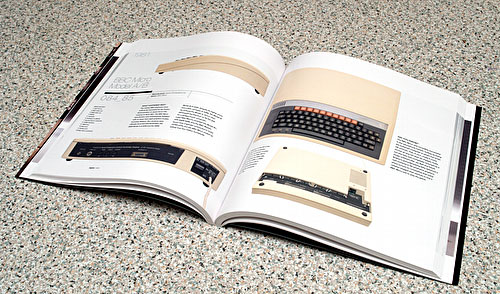
Despite a few omissions, Digital Retro is packed with interesting reading and well written it is, too. Each computer gets four pages and there are some very good illustrations, though Laing had to work hard to obtain pictures of particular models.
Tracking down the people that mattered
One of the sobering things that comes from talking to Laing about his work researching the book is that many of the pioneers who once featured on the front covers of august titles as Personal Computer World back in the 70s and 80s are now retired and, worryingly, forgetful. Laing was able to track down and interview such icons, for example, as Chuck Peddle, inventor of the 6502 microprocessor and the PET 2001 personal computer and now enjoying his retirement. Apparently Peddle found it quite difficult to recount the heady days of the birth of home computing.
Knowing how many stars of the early days of the industry Laing successfully contacted, I feel Digital Retro might have featured the people behind the computers more prominently, though that doesn't mean there is a dearth of human anecdotes. It's just that there are no pictures of these people and all the interesting things they had to say to Laing are presented as factual accounts rather than personal quotes. But I'm sure Gordon has enough material for another book that might focus on the personalities more than the PCs.
Old computers will never die
I also really like the way Laing closed concluded his book, reminding us that there is 'no need for home computers of the Eighties to become distant memories,' because many of them live on in the form of software emulations that can run on today's PCs and Macs. Laing adds: 'The PC may have won the war, but it's ironic how much fun can be had pretending you're back in 1982.'
My simple advice is that if you have read this far, the book is a must. Get it now or forever regret it!
To purchase this book please use one of the links below. All sales help fund this site:
Buy Digital Retro direct from the publishers - Ilex Press:
 Or buy through Amazon in your country:

|

| 
|  |
| Click on the flag that best relates to your location |
| The EU flag links to Amazon Germany, currently the only European Amazon outlet that supplies electronic goods like cameras priced in Euros. |
| Each Amazon outlet can ship to most countries in the world. |


